
EV charger types and cost in Melbourne
Every electric car sold in Australia charges through the same Type 2 plug. The chargers behind that plug are not the same. Here is how they differ, what each one costs installed, and how to pick the right one for your house and your car.
By Ali, licensed electrician (REC 32242), Airport West
The plug is the same, the charger is not
In Australia, every new EV uses a Type 2 connector for AC charging at home. Tesla, BYD, MG, Kia, Hyundai, Polestar, BMW and the rest all share it, so any charger with a Type 2 plug will physically connect to any car. That is the good news, and it means the choice is never about the plug.
What differs is everything behind the plug: how much power the charger can deliver, whether the cable is attached, and whether the charger is smart enough to work with your solar, your tariff and your switchboard. Those three things decide what you should buy and what it will cost.
One thing to clear up first. The cable that came with your car, the one that plugs into a normal power point, is a portable charger, not a home charger. It draws 10 amps and adds roughly 10 to 15 km of range per hour. It is fine as a backup. A proper wall charger is three to nine times faster and, more importantly, is on its own protected circuit instead of sharing a power point with the freezer.
Speed: 7 kW, 11 kW or 22 kW
Home chargers come in two families, and which one you can have depends on the power supply to your house, not on the charger you buy.
- Single-phase, 7 kW (32 amp). The standard for Melbourne homes. Adds about 40 km of range per hour, so an empty battery is full by morning. Most houses in Airport West, Essendon, Niddrie and the surrounding suburbs are single-phase.
- Three-phase, 11 kW or 22 kW. Only possible if your home has three-phase power, which is common on larger blocks in Keilor and Aberfeldie and on newer builds, and rare on 1950s to 1970s homes. 22 kW adds up to 120 km of range per hour, but the car has the final say: most EVs accept a maximum of 11 kW on AC, and some only 7 kW. A 22 kW charger on a car that accepts 11 kW charges at 11 kW.
The honest advice for most households is that 7 kW is plenty. The car sits in the garage for ten hours a night and is full by six. Three-phase makes sense if you already have it, drive long distances every day, or run two EVs off one charger.
Tethered or socket
A tethered charger has the cable permanently attached, usually 5 to 7.5 metres long. You pull up, plug in, done. It is the choice for most single-EV households.
A socket (untethered) charger has a Type 2 socket and you use your own cable. It looks tidier, the cable can be locked away, and it suits households with two EVs or anyone who wants to use a longer cable than the tethered models offer. The trade-off is fetching the cable every time you charge.
Smart or basic
A basic charger does one thing: it charges at full rate whenever the car is plugged in. That is fine on a simple house with a modern switchboard and no solar.
A smart charger connects to your Wi-Fi and adds three things that matter in Melbourne:
- Solar charging. The charger watches what your panels are exporting and charges the car with the excess instead of sending it to the grid for a few cents.
- Scheduling. Charge only during a cheap overnight EV tariff, or only when the sun is out, without touching the car.
- Load management. The charger measures the whole house and backs off when the oven, air conditioner or hot water is running, so the main switch never trips. This is what makes a 7 kW charger safe on an older single-phase supply that could not otherwise take it.
Smart chargers cost more, but if you have solar or an EV tariff the difference pays for itself within a year or two.
Tesla, Zappi, Wallbox and Ocular compared
These are the chargers we install most often across Melbourne's north-west.
| Charger | Power | Cable | Smart features | Best for |
|---|---|---|---|---|
| Tesla Wall Connector | 7 kW single-phase, up to 22 kW three-phase | Tethered, 7.3 m | Wi-Fi, scheduling, power sharing between Tesla units. Charges any EV. | Tesla owners, and anyone wanting a clean, well-priced tethered unit |
| myenergi Zappi | 7 kW single-phase or 22 kW three-phase | Tethered or socket | Best solar diversion on the market, scheduling, load management, app. | Homes with solar |
| Wallbox Pulsar Plus | 7 kW single-phase or 22 kW three-phase | Tethered | Compact, app scheduling, load management with the optional power meter. | Tight spaces, apartments, garages with little wall room |
| Ocular LTE / IQ | 7 kW single-phase or 22 kW three-phase | Tethered or socket | Australian-designed, app scheduling, load management. Basic model available. | Good value, and the basic model when you do not need smart features |
We also install BYD, Fronius and other brands on request, and we will tell you plainly if the charger you have in mind is a poor fit for your house.
What it costs in Melbourne
Prices below are typical ranges for Melbourne homes as at 6 September 2026, supplied and installed by a licensed electrician with a Certificate of Electrical Safety. Your quote from us is a fixed price for your specific house, not a range, and it will not change if the job takes longer.
| Item | Typical cost | Notes |
|---|---|---|
| 7 kW single-phase charger, hardware | $700 to $1,700 | Basic units at the low end, Zappi and Tesla towards the top |
| 22 kW three-phase charger, hardware | $1,200 to $2,200 | Only worth it if you have three-phase power |
| Standard installation | $700 to $1,300 | Charger within about 10 m of the switchboard, dedicated circuit, RCD protection, commissioning |
| Long cable run | $30 to $60 per extra metre | Rear garages on period homes in Essendon and Moonee Ponds are the usual case |
| Trenching for underground cable | $400 to $1,500 | Depends on distance and whether it is lawn, concrete or pavers |
| Switchboard upgrade if needed | $1,200 to $2,500 | Required if the board has ceramic fuses or no spare space. Improves safety for the whole house |
| Three-phase supply upgrade | $2,000 to $5,000+ | Involves the distributor. Rarely worth it just for a charger |
Putting that together, most Melbourne homes pay between $1,500 and $3,000 all up for a 7 kW smart charger installed. A simple install with a basic charger can come in under that. A three-phase 22 kW unit with a long run to a rear garage can pass $4,000.
The things that push a quote up are always the same: distance from the switchboard, digging, and the state of the switchboard. We look at all three before quoting, usually from a few photos and a phone call, so the price is right the first time.
How to choose
- Check your car's maximum AC rate. Tesla Model 3 and Y: 11 kW. BYD Atto 3 and Dolphin: 7 kW. MG4: 7 kW on most variants, 11 kW on some. Kia EV6 and Hyundai Ioniq 5: 11 kW. Buying a 22 kW charger for a 7 kW car wastes money.
- Check your supply. Look at your switchboard. One main switch usually means single-phase; three ganged together means three-phase. If in doubt, send us a photo.
- Decide on solar and tariffs. If you have panels or an overnight EV tariff, a smart charger is worth it. If not, a basic charger with load management is fine.
- Measure the run. Where will the car park, and how far is that from the switchboard? This is the biggest variable in the price.
- Get a fixed quote. Send us the car model, a photo of the switchboard and a photo of where the charger will go. We come back within two hours with a fixed price.
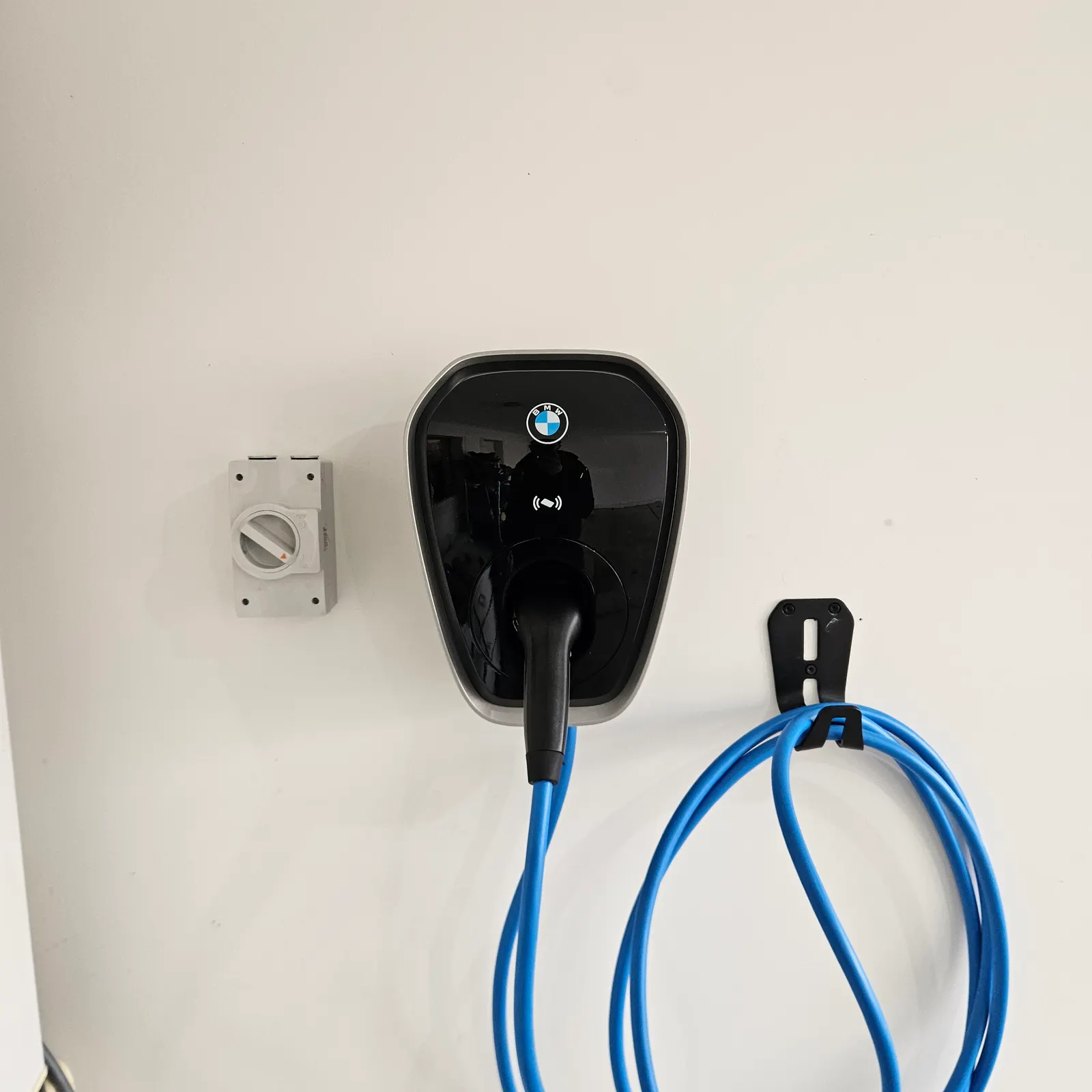
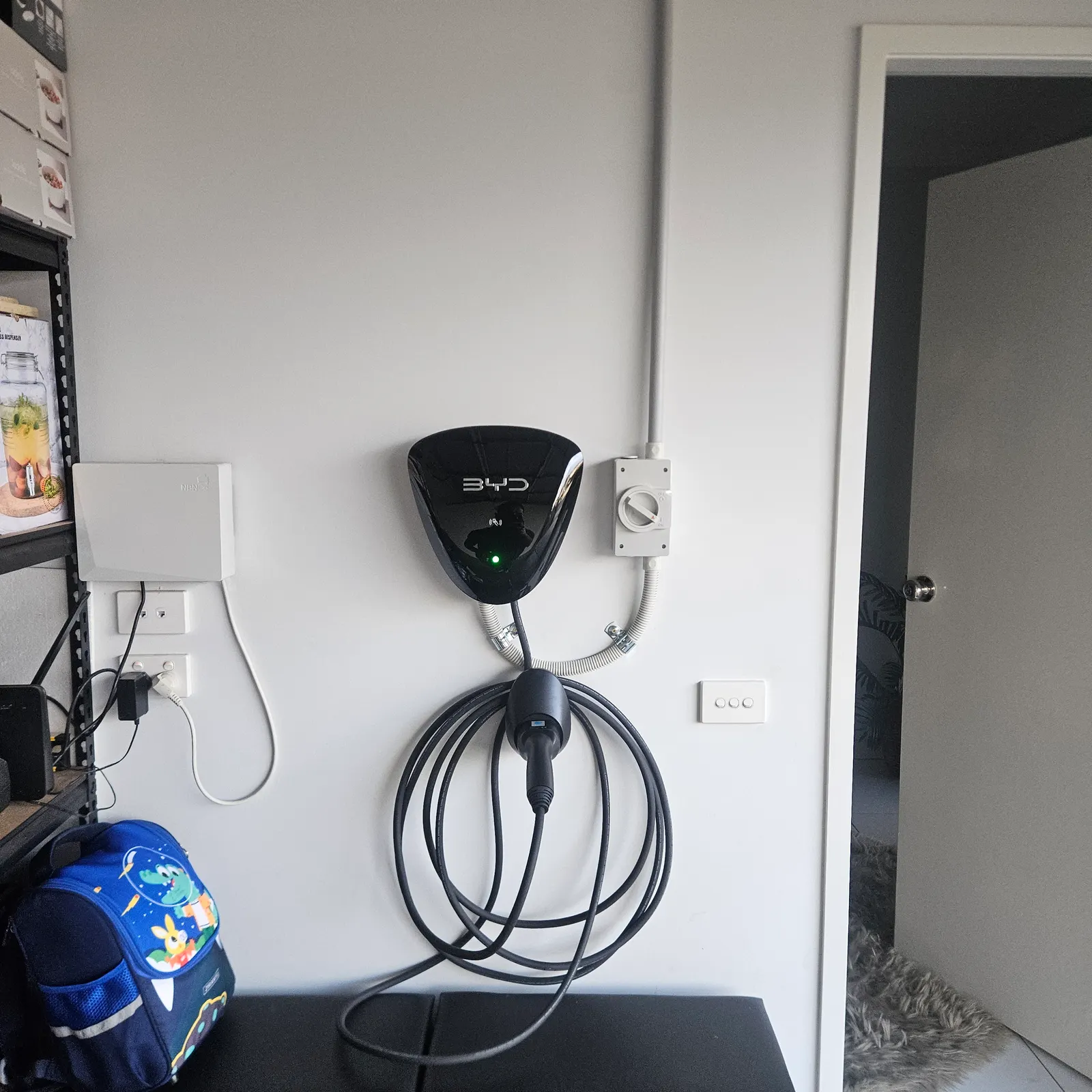
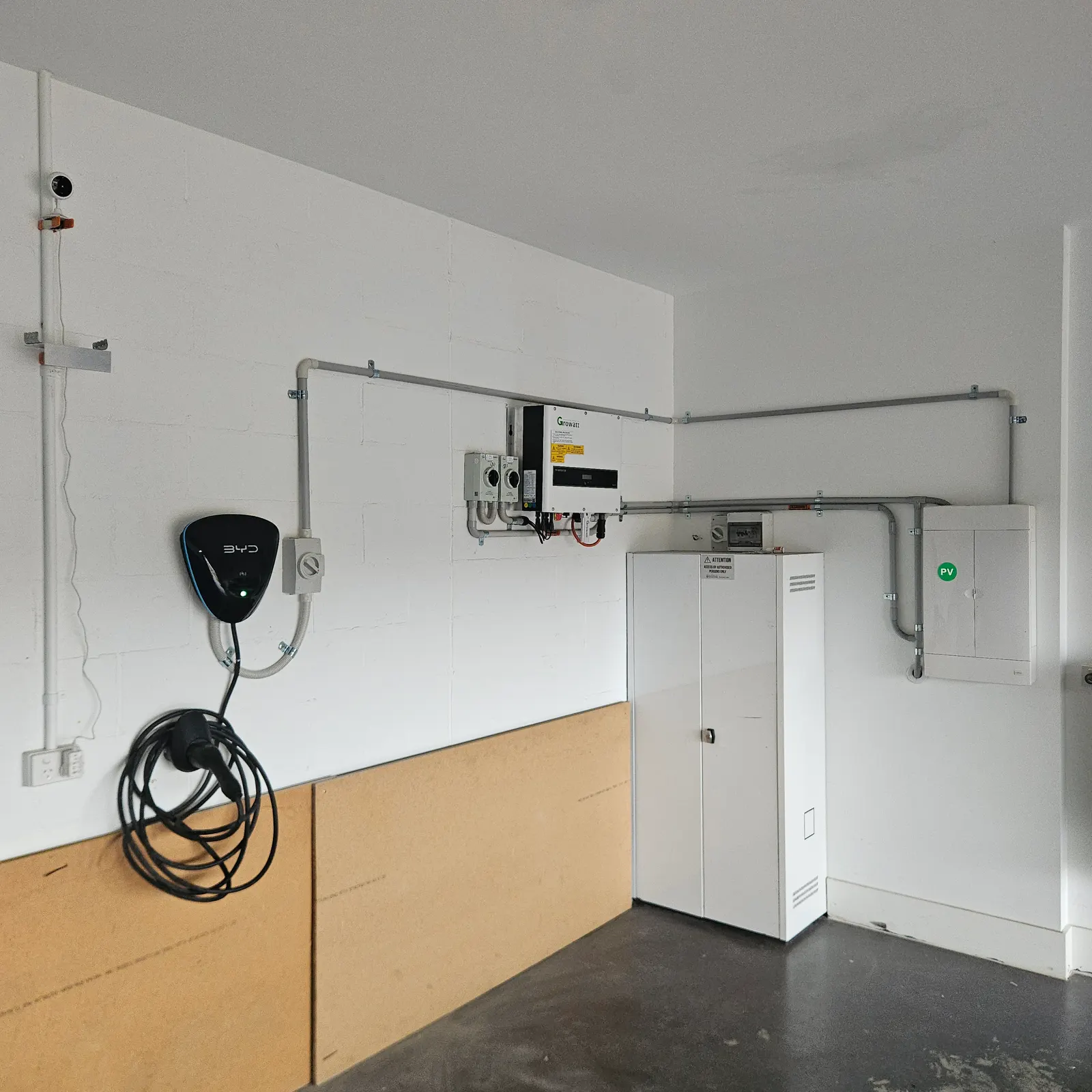
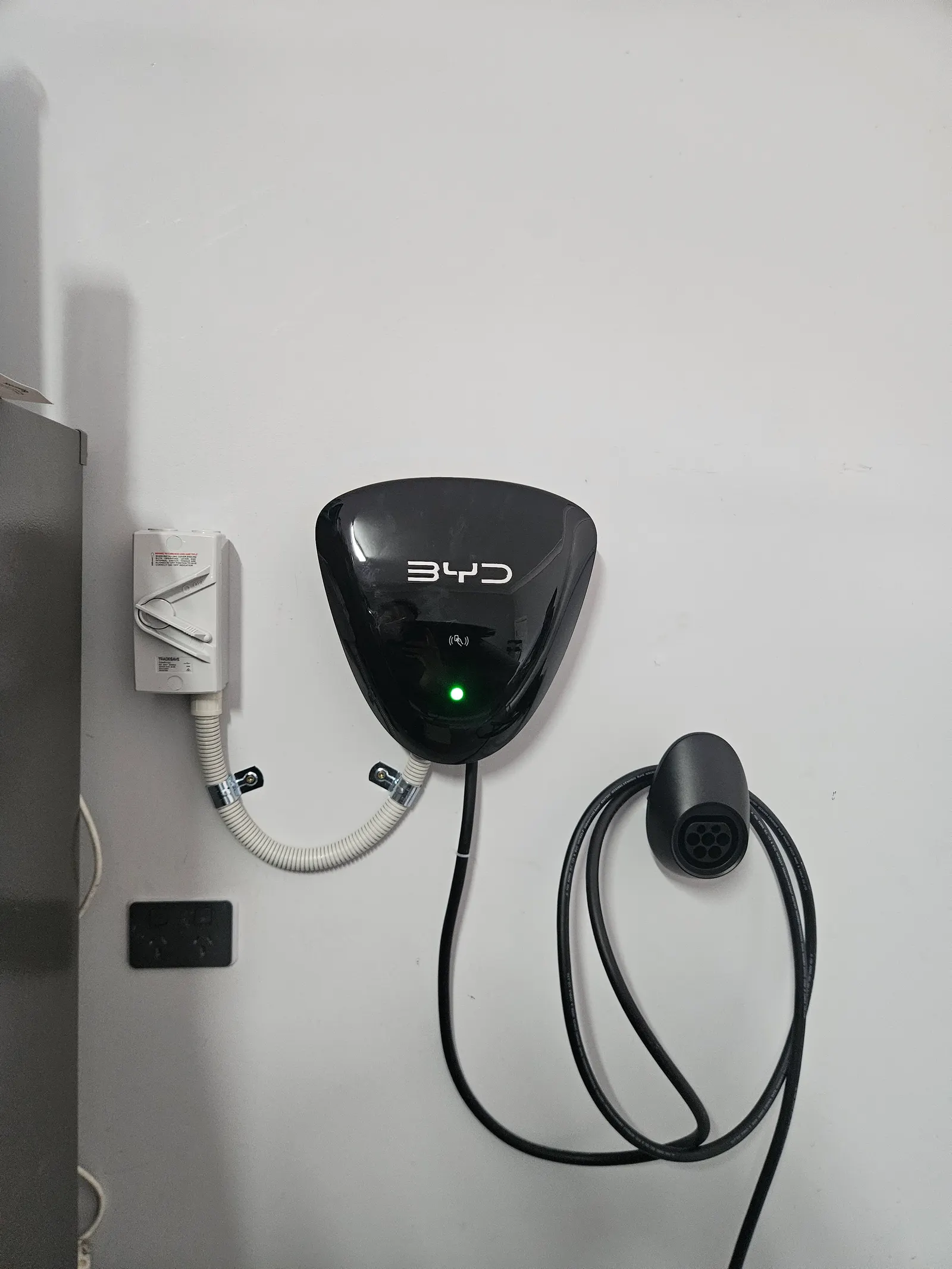
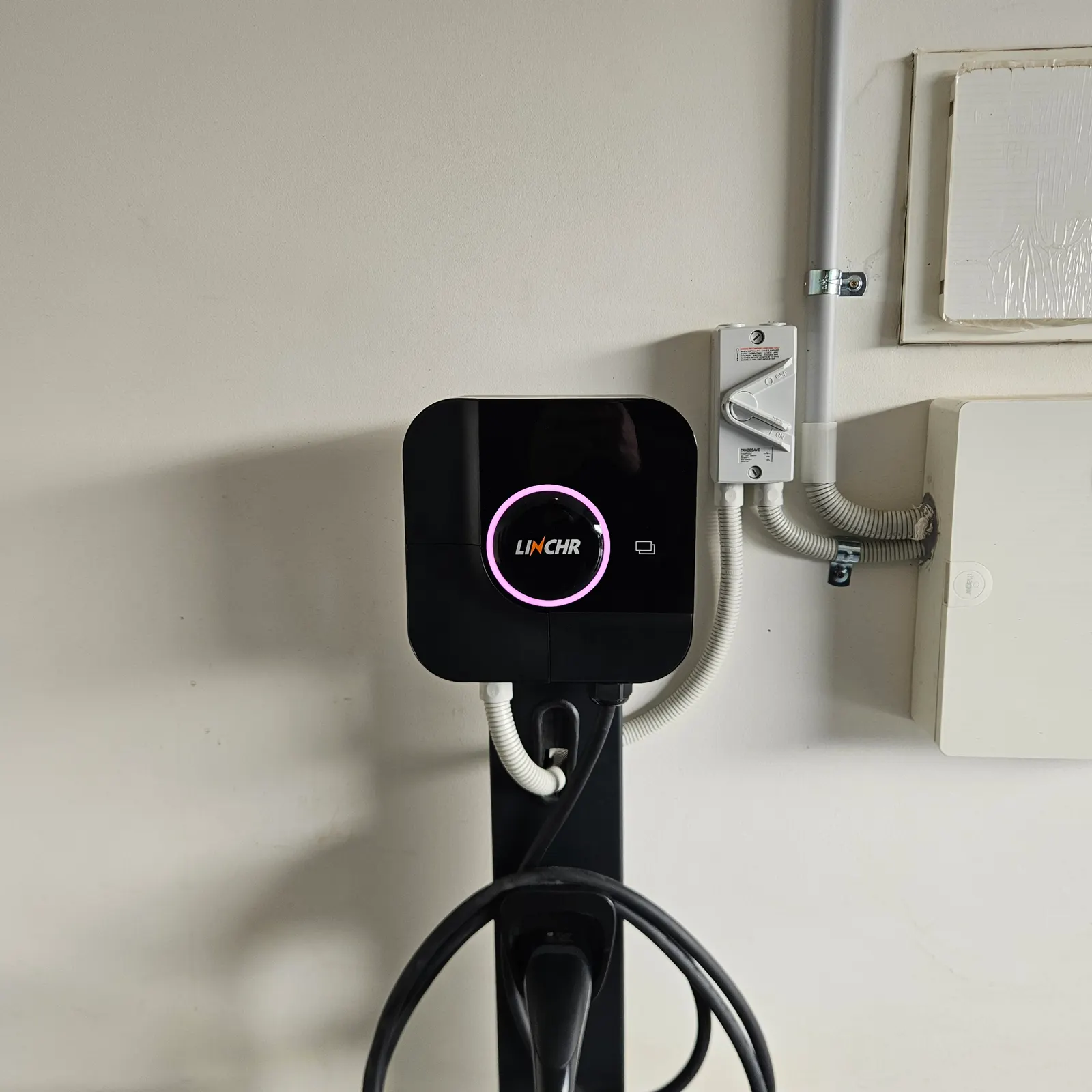
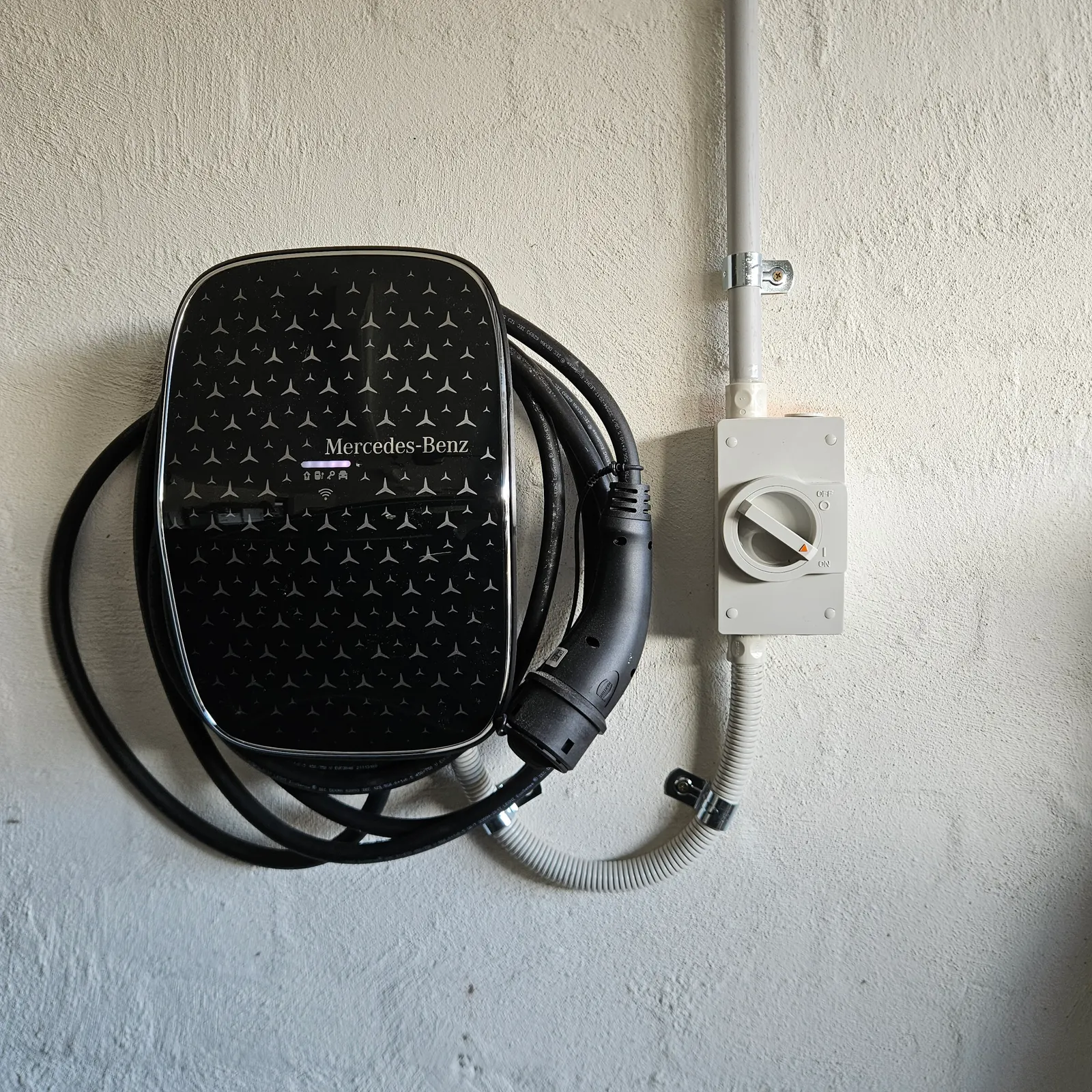
EV chargers we have installed around Melbourne's north-west
Real jobs, photographed on site. No stock photos.
EV charger questions we get asked most
Do I need a three-phase charger?
Usually not. A 7 kW single-phase charger adds around 40 km of range per hour, which fills most cars overnight from empty. Three-phase (11 or 22 kW) only helps if your home already has three-phase power, your car can accept more than 7 kW, and you regularly need a fast top-up during the day.
Can a Tesla Wall Connector charge a non-Tesla car?
Yes. The current Tesla Wall Connector sold in Australia has a standard Type 2 plug and charges any EV. The Tesla app features work best with a Tesla, but charging itself works for every brand.
Will a charger overload my switchboard?
It can if the board is old or already near capacity, which is why we check the board and the main supply before quoting. A smart charger with load management watches the whole house and slows charging when the oven or air conditioner is running, so the main never trips.
Is there a government rebate for home EV chargers in Victoria?
At the time of writing there is no Victorian Government rebate for a home charger, though programs change. Check Solar Victoria for anything current. Some electricity retailers offer cheap overnight EV tariffs, which a smart charger can schedule around.
How long does the installation take?
Most single-phase installs with the charger near the switchboard take two to four hours. Long cable runs, trenching to a rear garage or a switchboard upgrade add time, and we tell you that in the quote.
Ready to price one for your house? See our EV charger installation service or get a fixed quote below.
Need an electrician today?
Call now, or send us the details and we will come back with a fixed quote within 2 hours.
Free fixed quote for your EV charger
Tell us what you need. We come back with a fixed price within 2 hours during business hours - no hourly rates, no surprises.
- Fixed price, not an hourly rate
- Licensed and fully insured
- 86+ five-star Google reviews
In a hurry? Call 0426 143 331